


NAAM Seed Bank Project
Project Background
The whole world has been experiencing climate change due to global warming. There have been extreme weather conditions in many parts of the world. In Maharashtra, droughts as well as excessive rainfall has damaged many farms this year. The farmers in these areas have mentally and financially collapsed. This project intends to help the farmers stand up and have a sustainable growth in years to come.
Project Details
Under the Livelihood Project of Naam Foundation, a Seed Bank initiative was implemented in Kalamnuri, Hingoli district over a span of two years. In the first year, it was carried out with 1,000 farmers, and in the second year with 500 farmers.
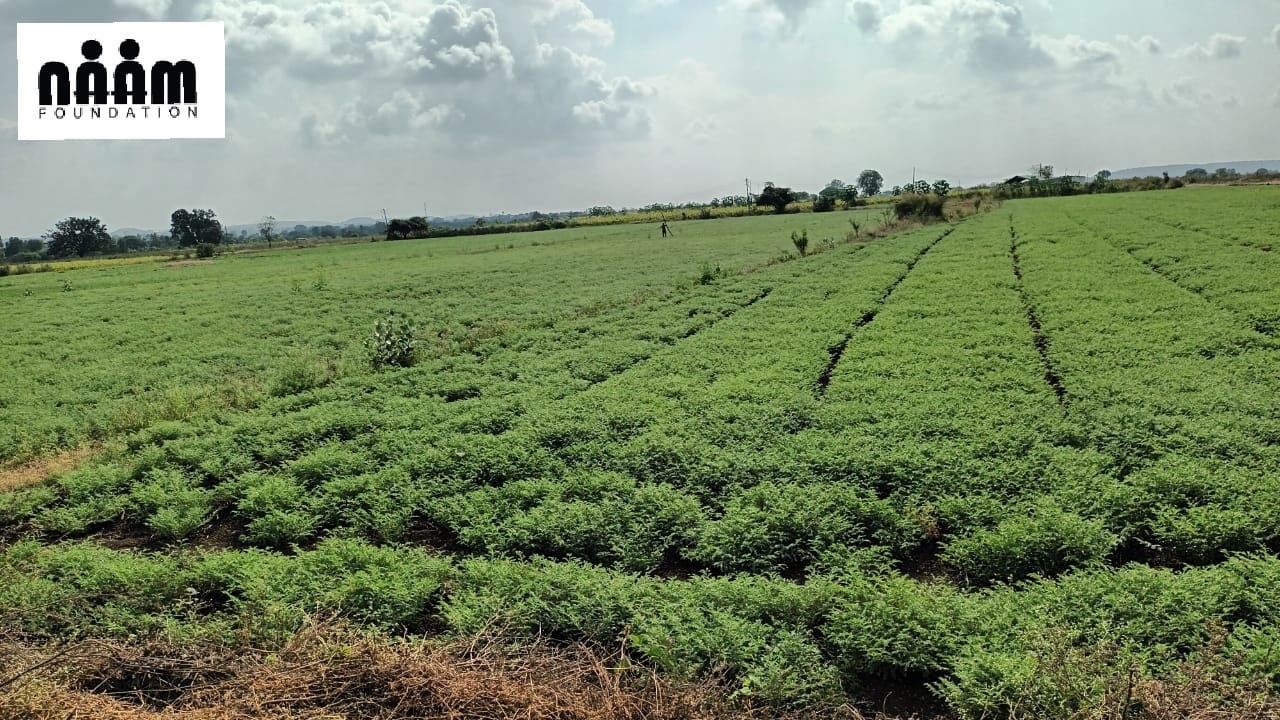
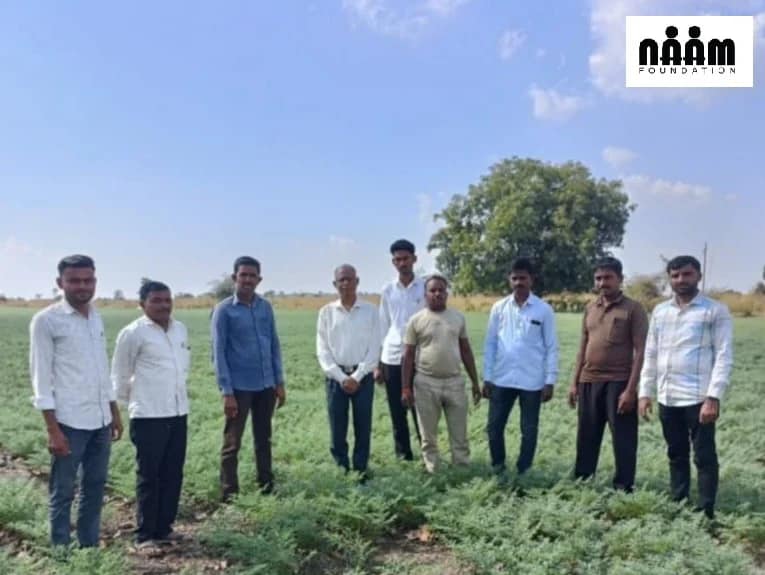
In the first year, 1,000 economically disadvantaged farmers in Hingoli district received foundation-grade chickpea seeds through Naam Foundation. These seeds were delivered directly to their farms. Prior to sowing, a training program was conducted, offering detailed guidance on modern agricultural techniques and tools.
Naam Foundation also provided seed-sowing machines free of cost. Demonstrations showed that using these machines reduced seed and labor expenses by nearly 40%. During these sessions, farmers were also educated on the damage caused by excessive water usage and its impact on soil quality.
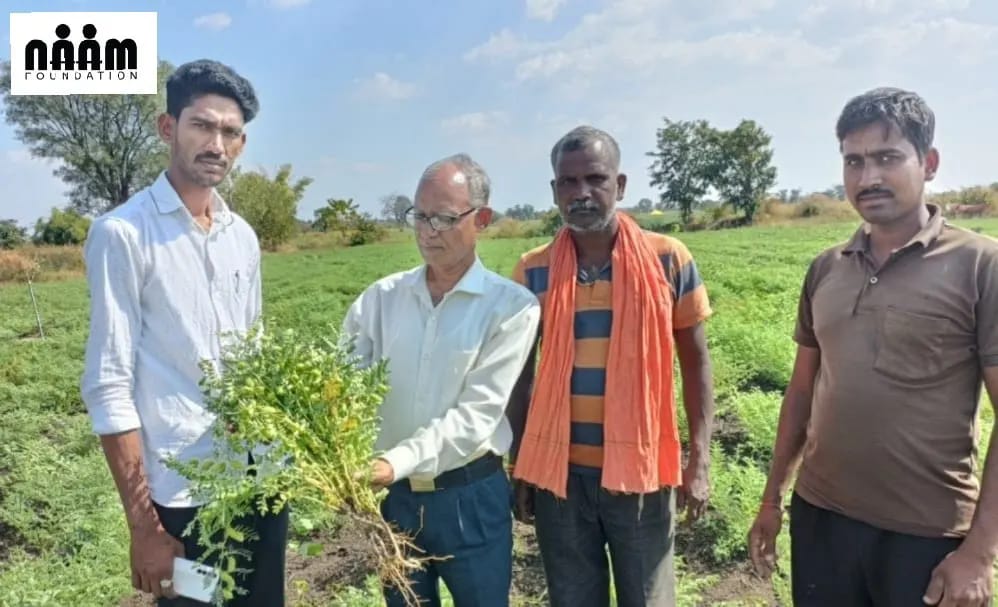
At the time of sowing, Trichoderma (a fungal disease control agent) was distributed free of charge. Farmers were shown how this treatment helps prevent seed decay in the soil. Post-sowing, agricultural experts visited farms to advise farmers on water management tailored to their specific crops.
Additionally, sorghum and millet were planted across the fields. This had a natural pest control effect: birds attracted to the sorghum also fed on the caterpillars and insects affecting the chickpea crops. Where possible, sunflower was also planted along field boundaries, further aiding in pest control.
Despite heavy rainfall and hailstorms in Hingoli this year, farmers using Naam Foundation’s seeds saw only a 15% drop in yield—retaining 85% of their expected harvest. In contrast, farmers who used their usual seeds experienced a 75% reduction, receiving only 20–25% of their expected yield. This difference was clearly evident to the farmers themselves.
Thanks to this improved yield, farmers received better market prices. Their per-acre production increased from 5-6 quintals to 8-9 quintals. The use of foundation-grade seeds also led to reduced crop disease. Farmers received excellent guidance on modern farming practices, which they applied to their Rabi crops as well. They no longer needed to buy low-quality seeds from the market, as the foundation seeds were preserved for future sowing.
In the second year, the Seed Bank project was similarly implemented for soybean crops, yielding comparable results. Following this success, Mr. Raosaheb Patil initiated a pilot chickpea project with 20 farmers in Nashik district. After its success, he has now launched a Seed Bank project for rice cultivation with 100 farmers.
This year, the project is being successfully implemented with 100 tribal farmers in Nashik district.
Get In Touch
If you wish to contribute to our journey, you can donate to our cause or join in our efforts by volunteering. If you wish to get in touch with us, please write to us at connect@naammh.org